From Dorm Room to Home Away From Home: How to Design a University Space Your Child Will Actually Love
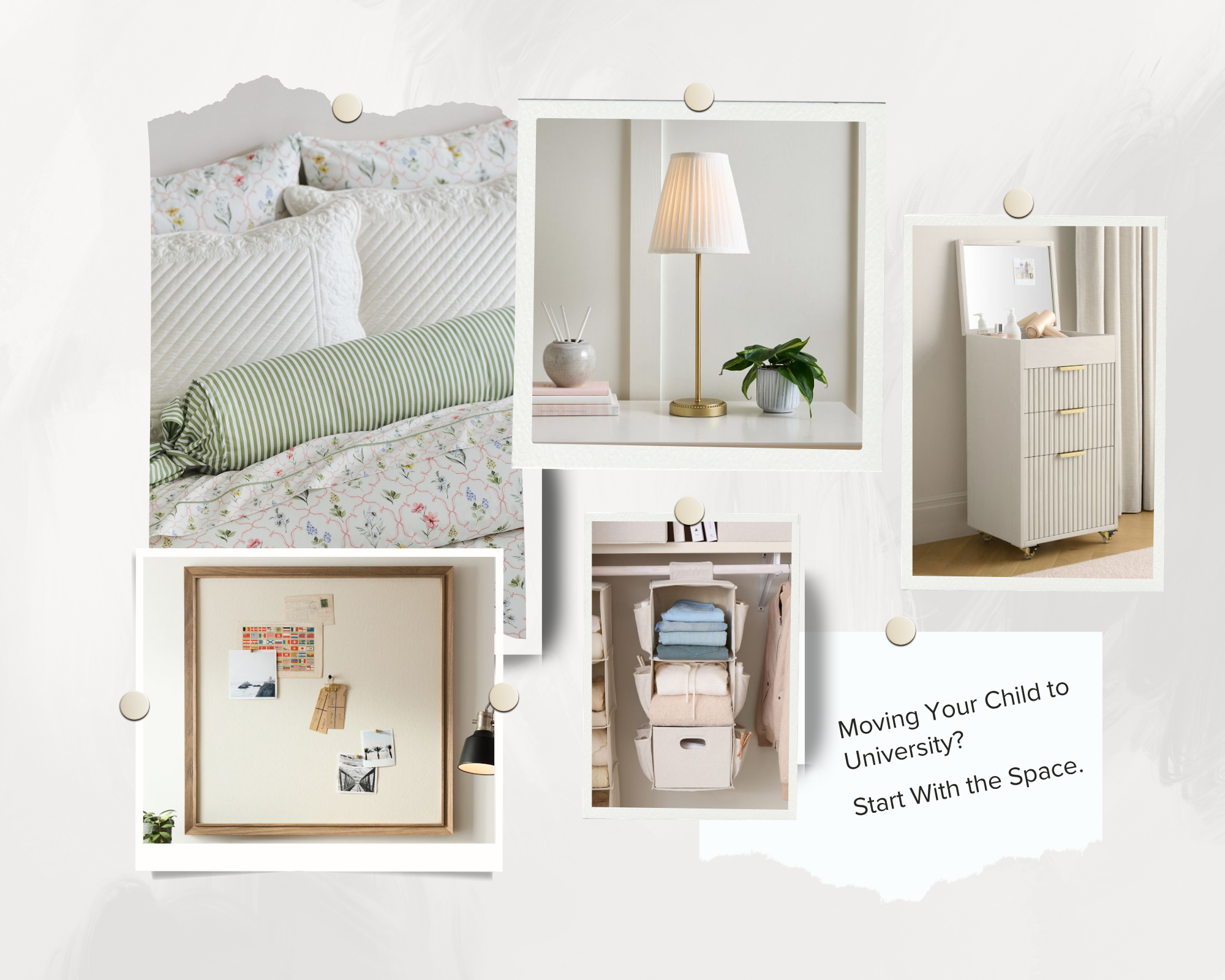
Sending your child off to university is a big milestone, for them and for you.
Suddenly, the room they’ve called home for years is being replaced by a small dorm room, student residence, or first apartment. And while university housing may not offer much space or flexibility, that doesn’t mean it has to feel temporary, impersonal, or chaotic.
With a little planning, even a basic dorm room can become a comfortable, functional space that feels like theirs.
The key is not to bring more; it’s to bring the right things.
Here are some of my favourite design tips for creating a university space that is both practical and beautiful.
1. Start With the Space, Not the Shopping List
Before ordering bedding, storage bins, lamps, and décor, find out exactly what the room includes.
Look at the floor plan if one is available, and find out the dimensions of the bed, desk, closet, and other furniture. Check what is provided and what your student is allowed to bring.
A little planning beforehand can prevent the classic university move-in problem: arriving with six storage containers that have nowhere to go.
Measure first. Shop second.
2. Create a Comfortable Place to Sleep
University students need a lot of sleep, and, realistically, they're probably not going to get enough of it.
Make the bed feel inviting with comfortable bedding, a good duvet, quality pillows, and a throw blanket. Even if the bed itself is basic, thoughtful layers can make a huge difference. Choose a colour palette that feels calm and cohesive rather than trying to match every item individually.
My advice? Keep the larger pieces neutral and introduce personality through smaller, easily replaceable accessories.
3. Make the Desk Work Harder
The desk will probably serve as a study area, workspace, snack station, makeup table, and occasionally a place to eat dinner. Keep it organized and visually simple.
A desk lamp, small organizers, a comfortable desk chair cushion, and a few carefully chosen accessories can make the space much more pleasant to use.
If space allows, consider adding a small desk shelf or vertical organizer. When floor space is limited, think vertically.
4. Take Advantage of Every Inch of Storage
Dorm rooms are notorious for having very little storage.
Look for opportunities under the bed, inside the closet, behind the door, and on the walls, while always checking the residence's rules before installing anything.
Under-bed storage is particularly useful for seasonal clothing, shoes, extra bedding, and items that aren't needed every day.
The goal is to give everything a designated home. Because when everything has a place, it becomes much easier to keep a small room feeling calm and organized.
5. Don't Forget the Lighting
Dorm room lighting is rarely inspiring.
A combination of ambient and task lighting can make the room feel considerably more comfortable. A desk lamp is essential, but a small bedside lamp or portable lamp can also create a much warmer atmosphere than relying entirely on overhead lighting.
Where permitted, warmer light in the 2700K–3000K range can help the room feel more inviting and relaxing.
6. Bring Personality Without Creating Clutter
This is where your student should have a say. Their university room is their space, so let their personality come through. Maybe it's artwork, photographs, books, a favourite colour, sports memorabilia, or a few meaningful objects from home. The trick is editing.
You don't need to display everything your child owns. A few meaningful pieces will have much more impact than covering every available surface.
7. Think About the Morning Rush
One of the most overlooked aspects of dorm design is how the room functions at 7:30 in the morning.
Where are the clothes? Where do shoes go? Where are keys, headphones, chargers, and other everyday essentials?
Good design isn't just about how a space looks. It's about making everyday routines easier. Create simple "drop zones" for the things your student uses every day.
8. Make It Feel Like Home, Without Recreating Home
There's a fine line between making a dorm room comfortable and trying to recreate their bedroom at home. University is also about independence.
Rather than bringing everything from home, think about which elements will give your child a sense of familiarity and comfort while still allowing the space to feel like a new chapter.
A favourite blanket, framed photograph, familiar scent, or a few cherished objects may be all it takes.
9. Choose Items That Can Follow Them to Their Next Home
University housing is temporary. Your investment doesn't have to be.
When possible, choose pieces that your child can take with them when they move into their first apartment or home. A good-quality lamp, attractive bedding, storage pieces, artwork, or a comfortable chair can transition to a future space.
This is one area where spending a little more on the right pieces can make sense.
10. Don't Try to Do Everything at Once
The temptation before move-in day is to buy everything. Resist it.
Start with the essentials and allow your student to discover what they actually need once they are living in the space. The room will evolve, and that's part of the fun.
The Most Important Design Tip?
Design the room for the student who will actually live there. Not the room you wish they had.
University is a time of transition, independence, and self-discovery. Their space should support that, not just look beautiful in photographs.
A thoughtfully designed dorm room can give them a comfortable place to recharge, study, relax, and feel at home while they're away from home.
And for parents, there's something wonderful about knowing that your child has a space that feels organized, comfortable, and uniquely theirs.
Need Help Getting It All Done?
If you're preparing for your child's move to university and don't have the time—or simply don't want the stress—this is exactly where a Design for a Day can help.
Together, we can create a practical and cohesive plan for the space, determine what is worth purchasing, work with what you already have, and create a shopping list tailored to your student's needs and budget.
Whether you're starting from scratch or simply need help pulling everything together, a few focused hours of professional design guidance can save you time, money, and a lot of last-minute decisions.
Your child is getting ready for a new chapter. Let's make their new space feel like home.